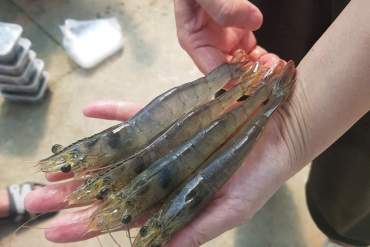
Industrializing Shrimp Farming: Total Control Comes at a Cost
Technology Is Driving a Shift Toward Full System Control
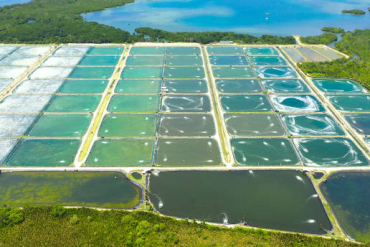
In recent years, shrimp farming has been moving toward industrialization, driven by the adoption of advanced technologies. Modern systems now incorporate high-efficiency filtration (such as recirculating aquaculture systems – RAS), AI-assisted monitoring, raceway designs, and even early-stage vertical farming concepts. In these systems, sensor networks are integrated into AI-based platforms to continuously track key parameters such as dissolved oxygen, temperature, and pH, enabling automated or semi-automated responses such as aeration, feeding, or water exchange in real time.
These innovations offer a clear advantage: greater system control. Farmers can closely monitor conditions and intervene when needed, reducing environmental variability and maintaining production conditions closer to optimal ranges. At the same time, continuous data collection allows each production cycle to be recorded and analyzed, turning farming operations into a structured and improvable system. In addition, designs such as raceway systems and vertical configurations improve space utilization, allowing higher productivity within limited land and water resources (Food and Agriculture Organization, 2022; National Oceanic and Atmospheric Administration, 2023).

The Trade-Off: High Cost, Complexity, and Operational Risk
However, this level of control comes with significant trade-offs. The most immediate barrier is capital cost. Fully industrialized shrimp farming systems—especially RAS or highly automated indoor farms—can require millions of dollars in upfront investment, depending on scale and level of automation (World Bank, aquaculture investment reports). Beyond the initial cost, these systems require continuous calibration, maintenance, and technical oversight. Sensors drift, equipment degrades, and automated processes must be regularly validated to ensure accuracy.
In addition, developing such systems is not simply a matter of installation. It often involves long periods of research, system design, and operational testing, sometimes taking years before reaching stable production. Even then, highly controlled systems are not immune to failure. Power interruptions, sensor errors, or software misinterpretation can still lead to significant losses.
Moreover, increasing reliance on automation introduces additional risks. These systems can be vulnerable to misuse, human error, or unauthorized intervention, especially when control is centralized within digital platforms. At the same time, reduced human presence on-site means that in the event of system failure, response time may be delayed, increasing the likelihood of large-scale losses. In practice, “full automation” does not eliminate risk—it shifts it into more complex technical and operational domains.

A Practical Direction: Hybrid Systems for Scalable Growth
Given these realities, a more practical direction is emerging: semi-automated systems where human expertise and intelligent systems work together. Instead of replacing operators, AI and automation act as decision-support tools—monitoring conditions, flagging anomalies, and assisting with routine control—while experienced technicians make final decisions and handle complex situations. This hybrid approach allows farms to benefit from data and automation without becoming fully dependent on them.
In addition, hybrid systems are generally easier to replicate and scale. With lower initial capital requirements, farms can expand incrementally rather than committing to large upfront investments. Training is also more practical, as operators can learn alongside the system instead of relying entirely on highly specialized technical expertise. Over time, continuous data collection supports gradual system improvement, allowing each new deployment to build on previous experience.
Conclusion
Rather than forcing full industrialization from the start, this approach enables farms to develop control, reliability, and scalability step by step, which may ultimately be a more sustainable path for shrimp farming. This approach reflects a broader shift in aquaculture: not toward full automation, but toward systems that combine data, control, and human expertise to achieve long-term stability.
References:
Food and Agriculture Organization (2022). The State of World Fisheries and Aquaculture 2022.
National Oceanic and Atmospheric Administration (2023). Aquaculture Technology and Innovation Overview.
World Bank (2021). Aquaculture Investment and Cost Structures.
MDPI (2025). Sustainable Innovations in Shrimp Aquaculture: Current Advances and Future Horizons.
Taylor & Francis (2025). Current Trends and Challenges in Shrimp Aquaculture Systems.
PubMed Central (2026). Analysis of Sustainability Differences Among Shrimp Farming Models.
Animal Reports (2026). Technological Innovations Driving Precision Aquaculture.
Source note:
This article synthesizes publicly available research and industry reports to provide a practical perspective on emerging aquaculture technologies.
More Related Articles
Managing Alkalinity in Shrimp Ponds: Why It Matters and How to Increase It Using Lime